What is Unfriended: Dark Web?
Unfriended: Dark Web is a 2018 American found footage horror film that functions as a standalone sequel to the 2014 supernatural thriller Unfriended1. Director Stephen Susco deliberately moved away from the ghost-driven premise of the original, grounding this instalment in real-world threats rather than paranormal revenge2. The shift means you don't need to watch the first film to follow the story—the connection is purely stylistic, not narrative.
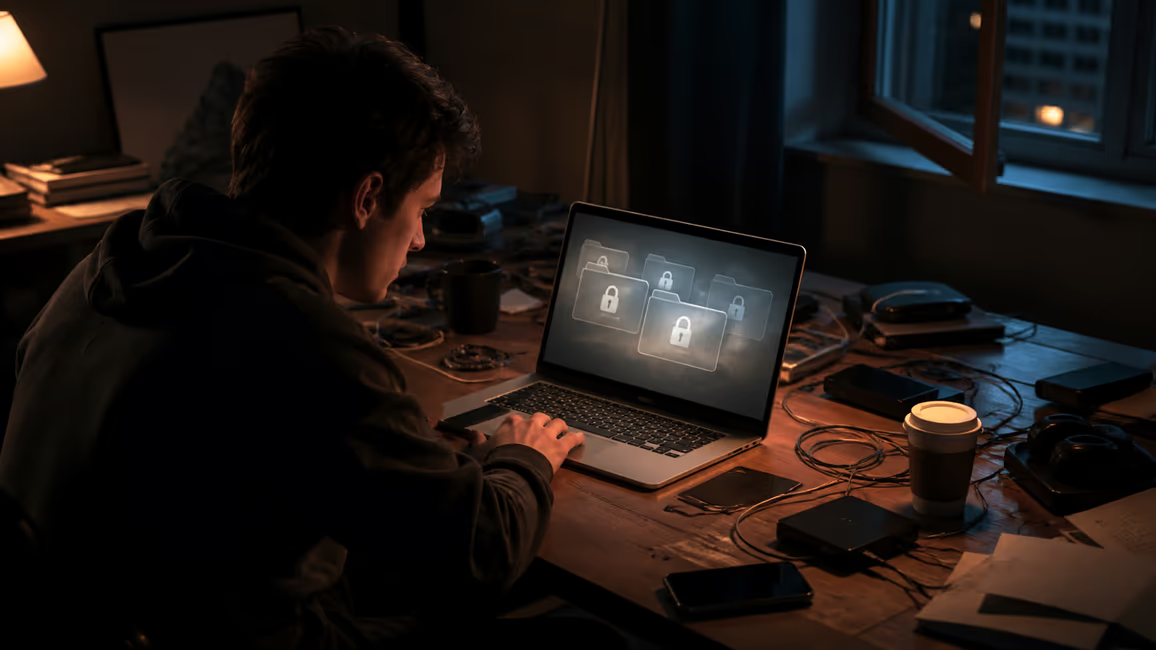
The plot centres on Matias, a college student who takes a laptop he finds at a café and uses it for a video chat game night with friends3. When he discovers hidden folders containing disturbing files, he realises the device belongs to someone involved in dark web criminal activity. His attempts to investigate trigger retaliation from a shadowy group who monitor his every move, turning a casual online hangout into a fight for survival3. The entire film unfolds through screen recordings—webcams, messaging apps, browser windows—a format known as 'screen-life' that confines the audience to what Matias and his friends see on their devices.
Thematically, the film examines online cruelty, the erosion of privacy, and violence against women, using the dark web as a backdrop for these concerns [3, 10]. It holds a 60% critic score on Rotten Tomatoes, with reviewers noting that while it prioritises scares over deep exploration of its themes, it remains 'steadily, undeniably effective' as a horror experience4. For viewers curious about how the dark web actually works, the film mixes accurate details—Tor, .onion addresses, Bitcoin payments—with dramatic inventions like live murder auctions and omniscient hackers [6, 7]. We examine those distinctions in detail later.
If you're unfamiliar with the infrastructure the film references, What is the Dark Web? A Comprehensive Overview explains the real technology behind the Tor network and hidden services.
The Plot: A Descent into Digital Horror
Matias acquires a laptop from a lost-and-found at an internet café, intending to use it for a video call with his girlfriend Amaya and a game night with five friends3. During the session, he discovers a hidden partition on the hard drive containing encrypted folders, disturbing video files, and chat logs that suggest the previous owner—identified only by the handle 'Norah C. IV'—is involved in dark web criminal activity [2, 6]. Rather than return the device, Matias attempts to investigate, opening files that reveal kidnapping footage and communications with other users.
The situation escalates when the original owner and an associated group—referred to in the film as 'The Circle'—realise someone has accessed their material [2, 8]. They begin monitoring Matias and his friends through webcams, microphones, and compromised accounts, demonstrating control over their devices and personal data. The group's retaliation is immediate: they manipulate online records, frame Matias for crimes, and issue direct threats through chat windows visible only to him.
Key turning points include the discovery that the laptop contains evidence of live-streamed violence, the realisation that the antagonists can track the friends' physical locations, and the group's ultimatum forcing Matias to choose which friend will be targeted [2, 7]. The film presents 'The Circle' as a coordinated international network placing live bids on commissioned murders—a concept that has no documented real-world equivalent [8, 9]. Despite decades of rumours, no genuine 'red room' broadcast has ever been verified by law enforcement or security researchers5.
The narrative confines itself entirely to screen recordings: browser tabs, messaging apps, video feeds. You watch Matias toggle between windows, delete files, and attempt to warn his friends, all while the antagonists manipulate what appears on his display. This format—known as 'screen-life'—means every plot development unfolds through digital interfaces, reinforcing the film's focus on how technology mediates both connection and threat6.
Themes and Messages Explored
Unfriended: Dark Web examines privacy invasion, digital footprints, and the consequences of curiosity through its screen-life format—every scene confined to what characters see on their devices. The film's central warning is straightforward: once you access someone else's digital life, you inherit their threats. Matias discovers hidden files on a stolen laptop and immediately becomes a target, demonstrating how digital forensics work both ways—deleted data can be recovered, and every click leaves a trace5. The antagonists monitor his webcam, read his messages, and manipulate his accounts in real time, turning everyday tools into surveillance instruments.
Privacy and Digital Footprints
The film shows how interconnected accounts amplify vulnerability. When the group accesses Matias's social media, email, and cloud storage, they reconstruct his relationships, routines, and location within minutes3. This mirrors real-world data aggregation: a single compromised password can cascade across services if you reuse credentials. The laptop itself becomes evidence of this principle—Matias assumes a factory reset erases content, but the antagonists recover files from unwiped partitions, a plausible scenario when secure deletion tools aren't used5.
The Dark Web as Threat Amplifier
Director Stephen Susco grounds the film in real-world technology rather than supernatural elements, using the dark web to represent tangible digital danger2. The portrayal mixes accurate mechanics—Tor, .onion addresses, Bitcoin payments—with dramatic inventions like 'The Circle', a coordinated murder-for-hire network that has no documented equivalent [6, 7, 8]. The film explores online cruelty and violence against women by depicting these crimes as commodified entertainment for wealthy clients7. While no verified 'red room' broadcast exists5, the concept taps into genuine concerns about exploitation material traded on hidden services.
The screen-life format amplifies these themes by showing you exactly what Matias sees: browser tabs cycling between innocuous chats and horrifying discoveries, pop-up warnings he dismisses, encryption he can't bypass. You watch him make decisions—open this file, ignore that alert—that determine outcomes, reinforcing the message that curiosity without caution carries consequences6. For context on how the real dark web differs from this portrayal, What is the Dark Web? A Comprehensive Overview separates infrastructure from myth.
The Dark Web's Portrayal in the Film
Unfriended: Dark Web depicts the dark web as a coordinated criminal marketplace where wealthy users bid on live-streamed murders, hackers control any device at will, and a single misstep triggers lethal retaliation [7, 8]. This portrayal mixes accurate technical details with dramatic inventions, creating a version of the dark web that prioritises horror over realism. We examine what the film gets right, where it exaggerates, and why the distinction matters for anyone forming opinions about hidden services based on fiction.
Accurate Elements
The film correctly shows several dark web mechanics. Characters access .onion sites through Tor, the browser bundle that routes traffic through volunteer relays to mask origin5. You see Bitcoin transactions for encrypted payments—though Monero has largely replaced Bitcoin for anonymity-focused transactions since the film's 2018 release5. The laptop's hidden partition and Matias's ability to recover 'deleted' files reflect real forensic vulnerabilities: standard deletion doesn't overwrite data, and without tools like BleachBit or full-disk encryption, previous owners' files remain accessible5. Anonymised handles and encrypted chat logs match how dark web forums and markets actually operate.
Exaggerations and Inventions
The film's central threat—'The Circle', a global network auctioning live murders to the highest bidder—has no documented real-world equivalent5. Despite decades of rumours, no genuine 'red room' (live-streamed killing) has ever been verified by law enforcement, journalists, or security researchers5. Most claims trace to scams: sites demand upfront payment in cryptocurrency, then disappear or loop pre-recorded footage. The film also grants its antagonists omniscience over devices and infrastructure—they hijack webcams, manipulate ISP records, and coordinate physical surveillance instantly5. Real attackers require specific vulnerabilities, phishing success, or pre-installed malware; they don't simply 'take over' any system on demand.
The portrayal of the dark web as a single, unified criminal society misrepresents its structure5. Hidden services range from whistleblower platforms and privacy-focused email to illegal markets and exploitation material, but they don't operate under centralised control. Markets compete, forums splinter over disputes, and law enforcement infiltrates networks regularly—none of which appears in the film's monolithic 'Circle'.
Implications for Audience Understanding
This dramatisation risks conflating the dark web's infrastructure with its worst uses. Viewers unfamiliar with Tor may conclude that accessing .onion sites automatically exposes them to coordinated criminal groups, when the majority of hidden services host mundane content or privacy tools. The film's effectiveness as horror depends on erasing nuance: every click leads to danger, every user is complicit, every threat is immediate. That narrative drive leaves little room to explain that Tor was designed by the U.S. Naval Research Laboratory for secure communication, or that journalists and activists rely on it in hostile regions.
The exaggerated hacker omniscience also distorts cybersecurity realities. Viewers may believe that once targeted, they have no defence—when in practice, basic hygiene (unique passwords, two-factor authentication, updated software) blocks most opportunistic attacks. The film's message that curiosity about the dark web invites retaliation discourages informed exploration, reinforcing fear over education6. For a grounded explanation of what the dark web actually contains, What Can You Find on the Dark Web? An Overview separates documented services from fiction.
Critical Reception and Audience Response
Unfriended: Dark Web received mixed-to-positive reviews, with critics acknowledging its effectiveness as a found-footage horror film whilst noting its reluctance to fully explore the themes it raises. On Rotten Tomatoes, the film holds a 60% 'Tomatometer' score based on 120 critic reviews; the consensus states it's 'more interested in chills than an exploration of its timely themes, but horror fans should still find this sequel to be steadily, undeniably effective'4. That assessment captures the film's core tension—it succeeds at generating dread through its screen-life format and escalating threats, yet prioritises suspense over substantive commentary on privacy or digital culture.
Why Critics Found It Effective
Reviewers praised the film's commitment to its gimmick: confining every frame to what appears on Matias's screen sustains tension because you can't look away from the same windows he's monitoring [5, 10]. The format forces you to track multiple threats simultaneously—a chat message from the antagonists, a video call with friends unaware of danger, a countdown timer in another tab. This creates a claustrophobic urgency that traditional cinematography struggles to replicate. The decision to ground the story in real-world technology rather than supernatural elements—a deliberate departure from the original Unfriended—also earned approval for making the horror feel plausible2.
Common Criticisms
The film's reluctance to interrogate its own premise drew criticism. It raises questions about online privacy, surveillance, and the commodification of violence, then resolves them through slasher-film logic rather than thematic payoff [3, 5]. The antagonists remain faceless and unexplained; 'The Circle' functions as a plot device rather than a explored concept, despite its potential to comment on wealth, power, and digital exploitation5. Some reviewers found the characters underdeveloped—they exist primarily to be monitored and eliminated, which limits emotional investment beyond surface-level fear.
Audience Reception
Viewer responses split along familiarity with the found-footage genre and tolerance for the screen-life format. Fans of films like The Blair Witch Project or the original Unfriended appreciated the technical execution and sustained tension; those expecting traditional horror cinematography or deeper exploration of the dark web's realities reported disappointment. The film's exaggerated portrayal of hacker omniscience and live murder auctions—elements with no documented real-world equivalent [7, 8, 9]—worked for audiences seeking escapist horror but frustrated viewers hoping for a grounded depiction of hidden services.
As a 'good movie' within the horror genre, Unfriended: Dark Web succeeds on craft—the screen-life format is executed with discipline, and the escalating threats maintain momentum—but falls short of being a standout because it avoids the thematic ambition its premise invites4. It functions as effective genre entertainment rather than a cautionary tale with lasting insight, using the terror of technology to unnerve without examining what that terror reveals about how we actually live online6.
Where to Watch Unfriended: Dark Web
Unfriended: Dark Web is available through multiple distribution channels, though availability shifts as licensing agreements change between platforms and regions. We outline the primary options for streaming, digital purchase, and physical media, along with how to verify current access in your area.
Streaming Platforms
The film has appeared on subscription services intermittently since its 2018 release1. Netflix hosted it in select regions during 2019–2020, but it's not currently part of the platform's global catalogue. Regional libraries change quarterly, so checking your country's Netflix directly—or using JustWatch to filter by location—confirms whether it's returned. Amazon Prime Video occasionally includes the film with a standard subscription in the United States and United Kingdom, though it more commonly requires rental or purchase through Prime Video Store.
Specialty horror streaming services like Shudder have featured Unfriended: Dark Web during themed programming blocks, but these additions are typically time-limited. If you subscribe to multiple platforms, JustWatch aggregates availability across Netflix, Prime Video, Hulu, and others, filtering by country and showing whether a title streams free with subscription or requires additional payment.
Digital Purchase and Rental
The film is available for digital rental (typically £3.49–£4.99 for 48-hour access) and purchase (£9.99–£13.99 for permanent download) through Amazon Prime Video, Apple iTunes, Google Play Movies, YouTube Movies, and Microsoft Store. Prices vary by region and promotional periods, but rental windows are standard across platforms—you have 30 days to start watching once rented, then 48 hours to finish. Digital purchases include HD and sometimes 4K options; verify resolution before buying if quality matters to your setup.
Physical Media
Unfriended: Dark Web was released on DVD and Blu-ray in October 2018 through Universal Pictures Home Entertainment. Both formats remain in print and available from retailers like Amazon, HMV, and second-hand marketplaces. The Blu-ray includes a standard 1080p transfer and typically features deleted scenes and a director's commentary track. Physical copies offer permanent access without dependence on streaming rights, though they lack the convenience of instant playback.
To check current options, visit JustWatch, enter the film title, and filter by your country—it displays every platform hosting the film, whether through subscription, rental, or purchase, and links directly to each service.
Common Misconceptions and Errors
Believing 'Red Rooms' are Real
Many viewers assume the 'red room' concept—live-streamed murder for an audience—is a real dark web phenomenon, as depicted in the film. In reality, no genuine 'red room' has ever been verified by law enforcement, journalists, or security researchers, despite decades of rumours5. These claims are typically scams designed to extort cryptocurrency from curious users, who then find the promised content doesn't exist or is pre-recorded.
Overestimating Hacker Omniscience
The film portrays antagonists with near-omniscient control over various devices and systems, instantly hijacking webcams, manipulating ISP records, and coordinating physical surveillance5. This leads to the misconception that dark web hackers can effortlessly compromise any digital system. In practice, real attackers require specific vulnerabilities, successful phishing attacks, or pre-installed malware; they cannot simply 'take over' systems on demand without exploits or user error.
Viewing the Dark Web as a Unified Criminal Society
Unfriended: Dark Web depicts 'The Circle' as a single, coordinated international cabal of criminals [7, 8]. This fosters the belief that the dark web is a monolithic, centrally controlled criminal enterprise. The dark web is actually a collection of disparate hidden services, ranging from legitimate privacy tools to illegal markets, operating independently and often in competition.
Misinterpreting Dark Web Access as Inherent Danger
The film's narrative suggests that merely accessing the dark web, as Matias does by finding a laptop with hidden files, automatically exposes users to extreme danger and coordinated criminal groups [2, 10]. This can lead to the misconception that using Tor or visiting .onion sites inherently invites retaliation. While illicit activities exist, the dark web also hosts legitimate content and privacy-enhancing services; accessing it does not automatically make one a target.
Assuming Deleted Files are Permanently Gone
Matias recovers 'deleted' files from the laptop, which plays a critical role in the plot5. This can reinforce the common misunderstanding that simply deleting files removes them permanently from a device. Standard file deletion only removes pointers to data, leaving the actual data recoverable without specialized tools like BleachBit or full-disk encryption.
Your questions, answered
What happened in Unfriended: Dark Web?
In Unfriended: Dark Web, Matias finds a laptop and uncovers hidden files, which draws him and his friends into the dark web. They become targets of a mysterious group, leading to a series of escalating threats and deadly consequences orchestrated through the laptop screen3.
Is there a movie about the dark web?
Yes, Unfriended: Dark Web is a 2018 horror film centered on the dark web. It explores themes of online cruelty and digital threats, depicting a group of friends targeted by a mysterious entity after discovering a laptop with hidden dark web content [1, 3].
Is Unfriended: Dark Web a good movie?
Unfriended: Dark Web holds a 60% 'Tomatometer' score on Rotten Tomatoes, with critics calling it 'steadily, undeniably effective' for horror fans, though it prioritizes chills over deep thematic exploration4. We find it effective as genre entertainment, particularly for its screen-life format, but it avoids the deeper commentary its premise could offer [5, 10].
What is the Unfriended: Dark Web on?
Unfriended: Dark Web is available for digital rental and purchase on platforms like Amazon Prime Video, Apple iTunes, Google Play Movies, YouTube Movies, and Microsoft Store. It was also released on DVD and Blu-ray in October 20181.
Unfriended dark web netflix
Unfriended: Dark Web was hosted on Netflix in select regions during 2019–2020, but it is not currently part of the platform's global catalog. Availability on streaming services like Netflix changes as licensing agreements are updated, so we recommend checking your local Netflix library directly for current access.
Unfriended dark web trailer
The official trailer for Unfriended: Dark Web typically showcases the film's screen-life format, featuring snippets of video calls, chat messages, and dark web interfaces. It highlights the escalating tension as Matias and his friends realize they are being hunted, emphasizing the film's focus on digital terror and real-world threats [2, 10].
Key Takeaways
Unfriended: Dark Web uses the dark web as a horror backdrop, focusing on digital threats and found-footage tension rather than factual accuracy6.
The film's 'red rooms' and hacker omniscience are fictionalized for dramatic effect; real dark web threats operate differently [7, 9].
The screen-life format is well-executed, contributing to the film's effectiveness as genre entertainment4.
Misconceptions about permanent file deletion and inherent danger from dark web access are reinforced by the plot [2, 6].
We advise viewing the film as horror entertainment, not a realistic depiction of the dark web's structure or risks.
To understand the actual landscape beyond cinematic portrayals, we recommend exploring what the dark web truly is and how it functions. For a factual overview, consider reading our article: What is the Dark Web? A Comprehensive Overview.
Bibliography
- Unfriended: Dark Web - Wikipedia
- Unfriended: Dark Web Director Explains His New Internet Horror Movie - Thrillist
- Unfriended: Dark Web : Synopsis | BH Tilt
- Unfriended: Dark Web | Rotten Tomatoes
- Unfriended: Dark Web — Movie Explained (And What's Real) | Dark Web 101
- The Screenlife Futurism of 'Unfriended: Dark Web' | Certified Forgotten
- Unfriended: Dark Web Director Explains Those Snuff Films
Explore More About the Dark Web
Dive deeper into our collection of insights and articles.
Discover More